| Molding Defects: The Top 5 Plastic Injection Molding Defects (and How to Solve Them) | |
| Release time:2022/7/22 | |
Plastic injection molding is the most widely used mass-production process in modern manufacturing. It’s so popular because useful products of every conceivable size, shape and function can be made quickly and efficiently with reliable and repeatable performance. As versatile as it is, getting the best results from plastic injection molding still requires adhering to good tool and product design practices that must respect some of the inherent limitations and challenges of the injection molding process. To help you to improve your parts and your mold tool designs, we want to explore the causes of the four most common molding defects and what you can do to mitigate or eliminate them when preparing your next project. Weld Lines on an injection molded partWhat are they?A weld line is a linear mark that looks like a scratch on the surface of an injection molded part, and can be found radiating away from a hollow feature or hole. A weld line is usually just a cosmetic defect but sometimes it can also weaken the part.
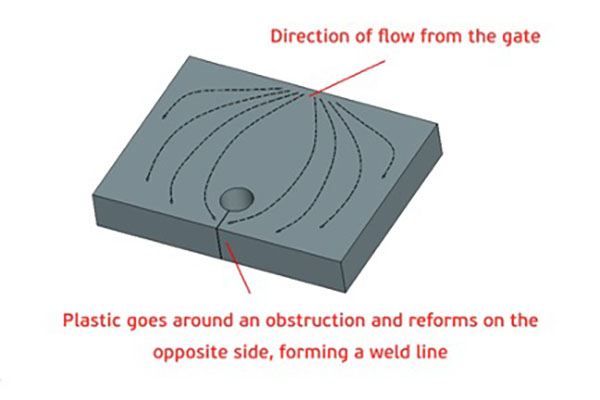
What causes them?Weld lines are created when a stream of hot liquid plastic resin inside the mold cavity is forced to go around some internal obstruction and then reunite on the opposite side of the obstruction. The point where the two fronts reform creates a characteristic line caused by the different cooling rates of the resin fronts. Can weld lines be prevented?Weld lines are injection molding defects that can be mitigated by a number of tactics that depend on your part design.
Gate Witness MarksWhat are they?Witness marks are dimples, burrs, raised ridges or other surface texture imperfections that may be found at one or more places on an injection molded part.
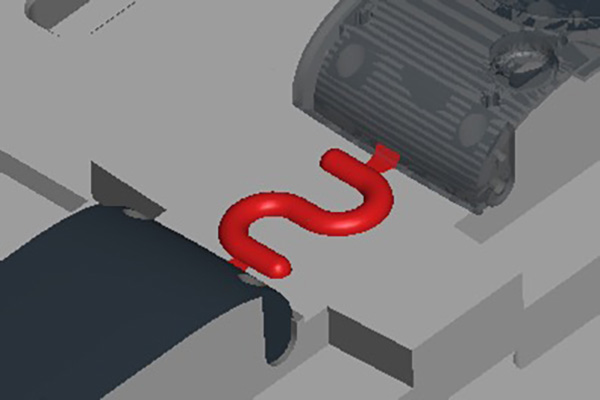
What causes this injection molding defect?A witness mark is the place where the waste sprue is broken free from the finished injection molding part. Hence, the design of the runner system determines where the mark will be located. Can gate witness marks be eliminated?Witness marks are a function of the injection molding process and these molding defects cannot be completely eliminated. Their effect on the look and performance of the part can be controlled by using good design practices, including the following:
Please note that all of these approaches to fixing molding defects could compromise other areas of the part design and finished molded products, so we advise consulting with the injection molder well in advance. Parting LinesWhat are they?A parting line is a thin seam or lip, usually raised rather than recessed. Parting lines are defects that typically go around the full circumference of a molded part, unless the circumference is impeded by the location of a slider or other insert.
What causes them during the injection molding process?Parting lines indicate the region where the two mold halves were pressed together to form the mold cavity. When the mold opens and the solid part is removed, this junction between the mold halves produces a characteristic mark which may be difficult to completely prevent during molding. Can parting lines prevented on the final product?Unfortunately, a parting line will almost always be present on the final product, but there are a few strategies to mitigate the look of a parting line on your injection molded parts:
Sink Marks on Molded PartsWhat are they?A sink mark is an unwanted depression or dip in the surface of a plastic injection molded part. They are defects that can be singular or appear as wavy, undulating lines.
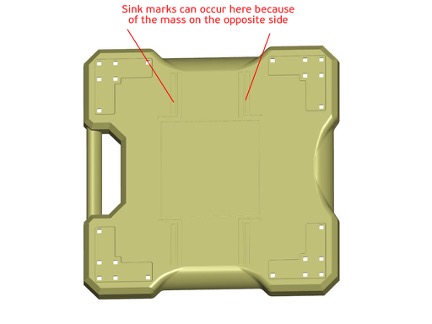
What causes sink marks on molded material?Some areas of a design – especially structural reinforcements like ribs, bosses and posts – have more thermal mass than the surrounding area. When this greater mass of liquid resin contacts the tool wall it cools down and shrinks faster than the surrounding area, creating a depression. Because of this, balancing out thermal forces within an injected part is one of the primary challenges for the product designer as well as the tooling engineer. Is there a way to prevent them?There are some best practices that can help to reduce the effect of sink marks.
Short ShotsWhat are they?A short shot is when an injection mold isn’t filled before gate shut-off, resulting in a part that is not fully formed.
What causes these molding defects?Short shots are defects of the injection molding process that can be caused by insufficient pressure, poor melt or poor part design. During molding, the hot liquid resin naturally follows the path of least resistance, so it fills larger cavities of the mold first. Thin-walled sections are areas with more resistance to liquid flow and thus are filled last. Since the resin is cooling by this stage, these areas may solidify prematurely. Thin areas may also trap unvented gas. Are there countermeasures to prevent them?Short shots are best prevented in the design stage. Here are some good practices to prevent these defects:
|
|
| Print this page || Closed the window |